
Reforms in Kazakhstan Discussed in Strasbourg
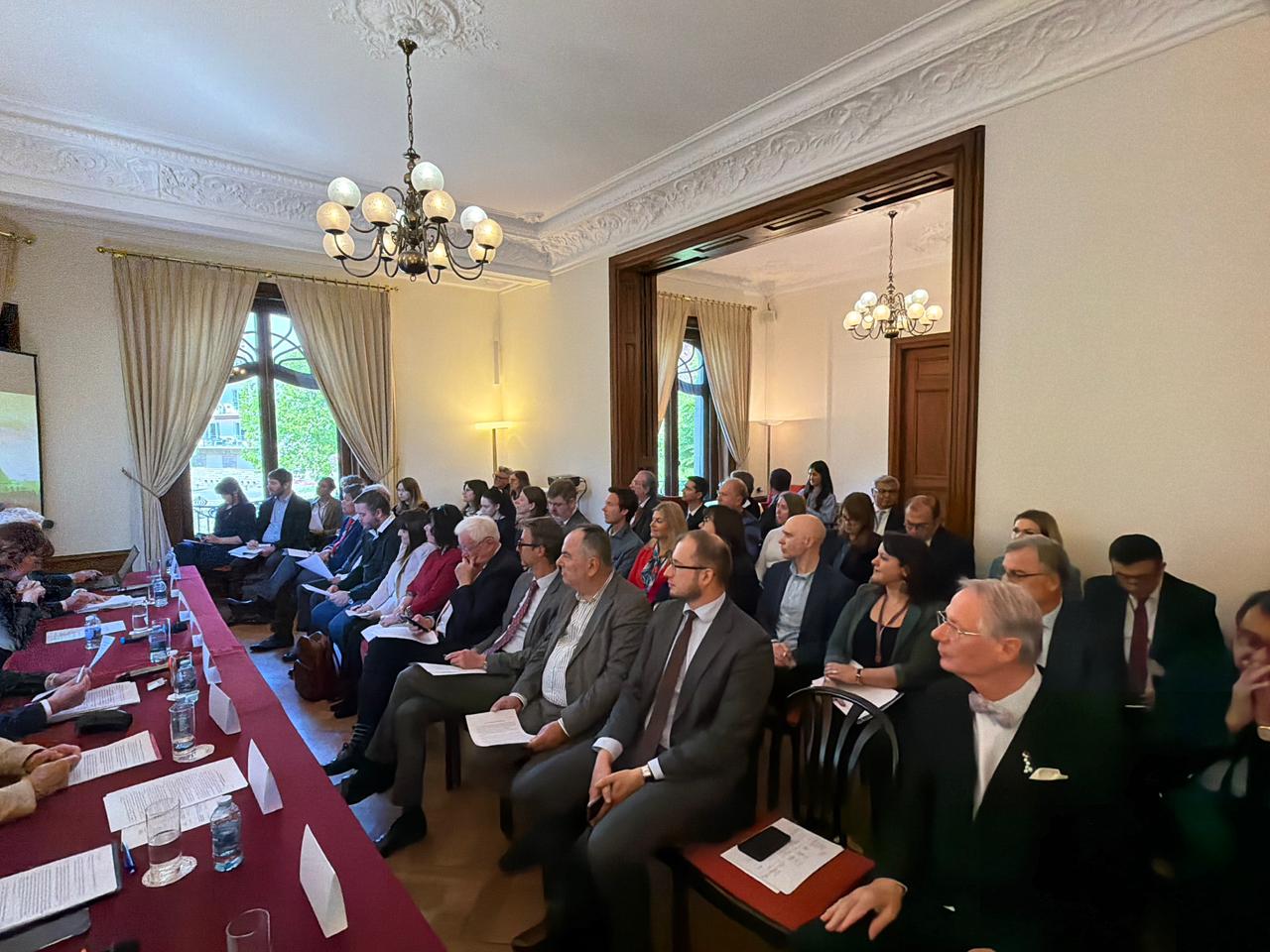
Strasbourg, April 23, Free Eurasia. On April 22, 2026, a roundtable titled “Constitutional and Parliamentary Reforms in Kazakhstan: A New Stage of Political Transformation” was held in Strasbourg at the venue of the European Parliamentary Association (APE). The event took place with the participation of the Consulate General of the Republic of Kazakhstan in Strasbourg.
The scientific and practical conference brought together representatives of political and parliamentary circles, the Council of Europe, the academic and expert community, as well as journalists.
The meeting was moderated by Anel Bakytbekkyzy, Consul General of the Republic of Kazakhstan in Strasbourg.
“It is a great pleasure for me to welcome you to today’s event dedicated to constitutional and parliamentary reforms in Kazakhstan. The purpose of today’s discussion is to examine the key directions and recent developments in Kazakhstan, as well as to exchange views with our European partners on strengthening democratic governance, transparency, and accountability,” Anel Bakytbekkyzy noted.
As Free Eurasia’s correspondent reports from Strasbourg, the conference was opened by Yevgeniy Bolgert, member of the Senate of the Parliament of the Republic of Kazakhstan and Secretary of the Committee on Constitutional Legislation, the Judicial System and Law Enforcement Agencies.
His speech focused on constitutional and parliamentary reforms in Kazakhstan and their significance for the country’s current stage of political transformation amid growing economic and foreign policy challenges.
The roundtable was attended by Zsolt Németh (Hungary), a representative of PACE and Chair of the political group European Conservatives, Patriots & Affiliates; Birutė Vėsaitė (Lithuania), Vice-Chair of the Socialists, Democrats and Greens Group in PACE; and Lord Michael German (United Kingdom), a member of the Alliance of Liberals and Democrats for Europe.
The participants focused on issues of parliamentary development, political modernization, and the international perception of Kazakhstan and its constitutional reforms. Special attention was paid to whether the referendum held in Kazakhstan on constitutional amendments was in line with European democratic standards.
Participants in the roundtable noted that Kazakhstan’s constitutional reforms could contribute to the country’s transition from a personalist model of governance to a more institutionalized system closer to the European model of democratic state structure.
The expert community at the conference was represented by Alberto Turkstra, Project Director of the Diplomatic World Institute (Brussels), Emmanuel Dupuy, President of the Prospective and Security Institute in Europe (Paris), and Islam Tekushev, Editor-in-Chief of Free Eurasia (Prague).
In his speech, Islam Tekushev spoke about the role of social media in informing citizens and encouraging civic participation during Kazakhstan’s constitutional referendum held on March 15, 2026.
He noted that, according to his observations as a journalist working in Astana on the day of the vote, most of the citizens he interviewed had learned about the referendum through social media.
According to him, in the weeks leading up to the vote, digital platforms not only reminded people of the date and significance of the referendum, but also explained the substance of the proposed constitutional changes.
The speaker stressed that social media performed a dual function: on the one hand, it served as a tool for voter mobilization, contributing to a high turnout; on the other hand, it acted as a channel of information and explanation through which citizens were informed about the substance of the reform, the redistribution of powers, and the significance of the new constitution. In his view, Instagram played a particularly important role, as it was mentioned more often than other platforms by voters as a source of explanatory materials about the referendum.
Thus, the roundtable held in Strasbourg on April 22, 2026 became an international platform for discussing constitutional and parliamentary reforms in Kazakhstan as part of a new stage of the country’s political transformation.
The scientific and practical conference brought together parliamentarians, representatives of the Council of Europe, expert and academic circles, and journalists, making it possible to examine the reforms in a broad political and expert context.

