
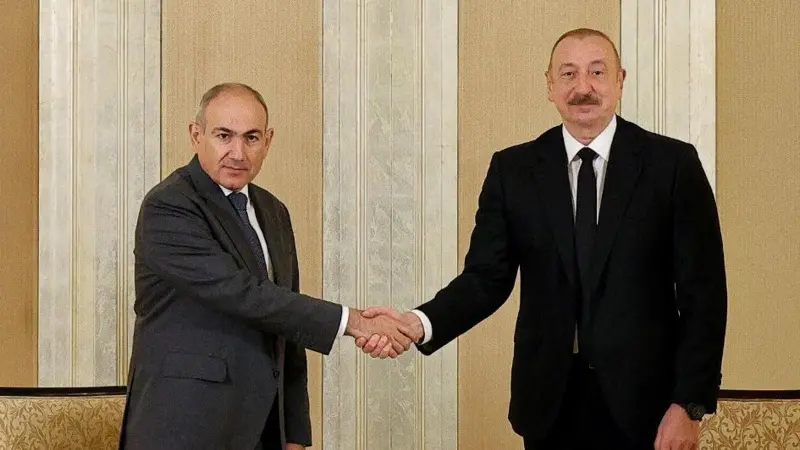
Aliyev and Pashinyan Meet in Washington as U.S. Displaces Russia in Caucasus Peace Process
Prague. 8 August 2025 — Free Eurasia. The meeting between Azerbaijani President Ilham Aliyev and Armenian Prime Minister Nikol Pashinyan in Washington marks a significant geopolitical shift. Once the dominant mediator in the Nagorno-Karabakh conflict, Russia has lost ground due to its war in Ukraine. Now, both Armenia and Azerbaijan are turning to the United States as a new peace broker.
During Donald Trump’s first term, neither Aliyev nor Pashinyan secured a meeting with him. The region was also overlooked early in Trump’s second term, as his administration focused on larger peace efforts in Ukraine and Gaza. Only after those efforts faltered did Trump shift attention to the Armenian-Azerbaijani conflict, where hostilities have ended and a peace treaty has been drafted but not signed.
The Washington summit carries symbolic weight, showing a decline in Russia’s influence. However, practical outcomes remain unclear. Aliyev continues to demand that Armenia amend its constitution before signing any agreement.
Some reports suggest a compromise has been reached regarding the route connecting Azerbaijan with its exclave, Nakhchivan. The so-called “Zangezur corridor” would remain under Armenian control but be managed by an American company.
A joint declaration expressing a shared desire for peace is expected. Still, analysts caution that active U.S. involvement could disrupt the delicate bilateral progress made in recent years.
Russia’s Role Fades
Republicans have praised Trump’s role in the summit, but in reality, it follows growing tensions between Baku and Moscow. The killing of two Azerbaijani citizens by Russian police in July triggered a serious diplomatic fallout. Armenia, meanwhile, arrested bishops and opposition leaders, accusing them of plotting a coup — allegedly with Russian support.
Both countries have grown disillusioned with Moscow. Russia’s invasion of Ukraine reminded them of historical grievances and sparked renewed efforts to break free from its influence. In Yerevan, many now view Moscow as a liability. In Baku, officials want Russia to recognize Azerbaijan’s growing power and sovereignty.
This shift culminated in the Abu Dhabi summit — the first bilateral meeting between Aliyev and Pashinyan without mediators. Delegations had worked for months to reach this point, allowing both sides to openly communicate. After the summit, the tone in Azerbaijani media toward Armenia grew notably more respectful, and Armenian officials stopped warning of military escalation.
Yet obstacles remain. Aliyev insists Armenia must hold a referendum to amend its constitution, likely pushing peace back to mid-2026. Disagreement also continues over the railway between Azerbaijan and Nakhchivan. Aliyev wants a corridor free of Armenian customs checks; Pashinyan opposes this as a breach of sovereignty. A possible compromise: customs checks handled by a Western company. However, a Swiss firm previously proposed for the role failed to satisfy both sides.
The U.S. Steps In — Carefully
In July, Washington appeared ready to step in. But early leaks and blunt remarks from Trump’s team led Armenia to reject the idea. Sources now say U.S. diplomats may have found a workable compromise, though it remains unconfirmed.
According to analysts Philip Gamaghelyan and Zaur Shiriyev, two years of direct talks achieved more than three decades of international mediation:
“Baku and Yerevan began building relations as sovereign states — a long-awaited break from colonial dependence,” they wrote. “But introducing a global superpower risks undermining this fragile progress.”
Trump’s Peace Legacy?
Republicans have linked the summit to Trump’s legacy as a global peacemaker. Congressman Joe Wilson recently stated:
“No U.S. president has done more for peace than Trump — from Congo to Thailand to Pakistan. Armenia and Azerbaijan are next. He deserves the Nobel Peace Prize!”
According to Armenian officials, Yerevan saw Trump’s Nobel ambitions as an opportunity. With other peace efforts stalling, the Caucasus became a chance for the former president to claim success.
Baku, having eliminated foreign mediators, was more cautious. But closer U.S. ties and the prospect of meeting Trump were tempting. Talks began over assigning customs control on the corridor to an American company. But early leaks and a damaging comment from U.S. envoy Thomas Barrack derailed progress.
Barrack suggested a 100-year U.S. lease of Armenian territory — an idea Armenia quickly rejected as a threat to sovereignty. He also called the conflict “tribal,” offending both sides. Armenian law permits land leases only for agricultural use.
Final Warning
A source familiar with Baku’s strategy warned that American involvement could backfire. Without diplomatic nuance and with a rush for results, Washington may harm more than help.
“Any renewed Western involvement is unlikely to be a gift. It may simply replace Moscow’s influence with Washington’s — risking backlash, instability, and eventual retreat,” write Shiriyev and Gamaghelyan.