Does Russia’s Foreign Ministry See the Baltic Region as a New “Theatre of War”?
Prague, August 21, Free Eurasia. The official journal of the Russian Foreign Ministry, International Affairs, has published an article portraying the Baltic region as a potential theatre of military operations.
The author, political scientist Nikolai Mezhevich, argues that the Baltic Sea is turning into a “grey zone” of heightened danger, where alongside military threats, “hybrid” methods of pressure are actively employed — propaganda, intelligence operations, cyberattacks, and psychological warfare.
According to Mezhevich, Russia’s strategic position in the Baltics has worsened after Finland and Sweden joined NATO. As a result, Moscow is losing opportunities for free access to the North Sea, increasing its dependence on the restricted space of the Baltic Fleet.
“Guarantees of Danger” Instead of Security
The author draws a parallel with the 1962 novel Fail-Safe, in which a technological error almost led to a nuclear catastrophe. The article states that the current situation in the region also creates conditions for crisis, where “any mistake or provocation could lead to catastrophic consequences.”
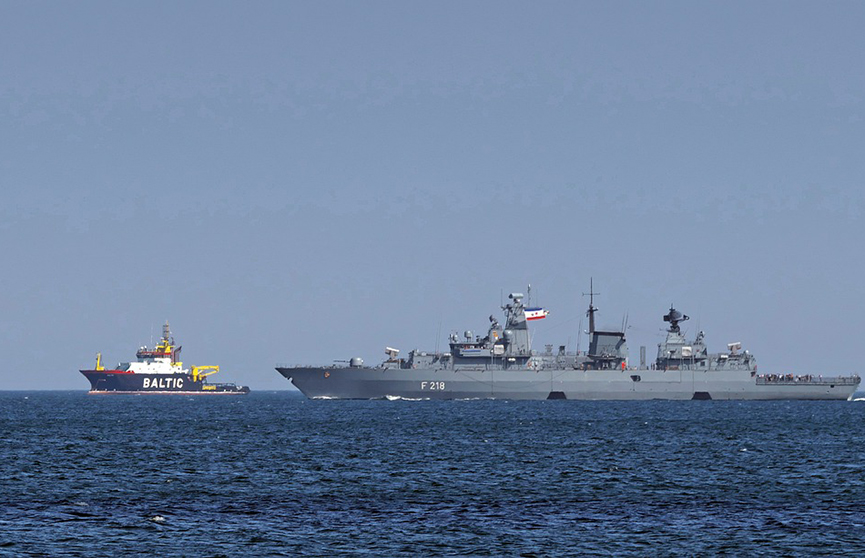
Particular attention is given to the militarization of the region: Sweden has strengthened the defense of Gotland Island; Estonia, Latvia, and Finland are discussing border mining plans; NATO is reinforcing its military presence close to Russian territory.
Context of the War in Ukraine
The publication appeared against the backdrop of the ongoing war in Ukraine. Analysts note that the rhetoric of the “grey zone” in the Baltics closely mirrors the methods Russia applied against Ukraine long before the full-scale invasion: disinformation, the use of civilian infrastructure for military purposes, and the provocation of instability.
The journal International Affairs is published under the auspices of the Russian Ministry of Foreign Affairs. This means that the article reflects not only the author’s opinion, but also an intention to frame the Baltic region as an area of heightened tension. The phrase “potential theatre of military operations” is an important marker that places the region within Russia’s strategic agenda.
Experts believe such publications reflect Moscow’s official position and prepare public opinion for a possible expansion of confrontation beyond Ukraine.