Over 100 Central Asian POWs Held in Ukraine
Prague, 15 December, Free Eurasia. More Than 100 Prisoners of War from Central Asia Held in Ukrainian Captivity
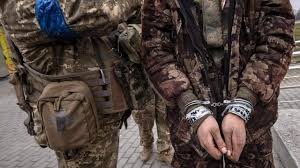
More than 100 prisoners of war who are citizens or natives of Central Asian countries are currently being held in Ukrainian captivity. Their number continues to grow: over the first 11 months of 2025, twice as many Central Asians were captured as during all previous years of the full-scale war combined.
This was stated by Vitaliy Matviyenko, spokesperson for the Ukrainian project “I Want to Live”, in an interview with Free Eurasia.com.
“Overall, more than one hundred citizens and natives of Central Asian countries are currently held in Ukraine as prisoners of war. Their number is steadily increasing. In the first 11 months of 2025 alone, twice as many Central Asians were captured as during all previous years of the full-scale invasion combined. In total, foreign nationals from 40 countries who fought on Russia’s side are among the POWs,” Matviyenko said.
How Migrants End Up at War
According to human rights defenders, the stories of these prisoners of war are largely similar. Labor migrants — often without stable legal status — are detained by Russian law enforcement agencies. While in temporary detention facilities, they are allegedly presented with a harsh choice: sign a military contract or face imprisonment, deportation, or other forms of repression.
Some were reportedly promised guard duties far from the front line. In reality, they were sent to active combat zones in Ukraine, where they were subsequently captured.
A Legal Paradox
The paradox of the situation is that, unlike in Russia — which effectively throws migrants into the meat grinder of war — those held in Ukrainian captivity are placed within a clear legal framework and are informed of their rights.
“All Russian Armed Forces personnel who fought against Ukraine and were captured are granted prisoner-of-war status under the Third Geneva Convention, as well as Ukrainian Cabinet of Ministers resolutions No. 721 of June 17, 2022, and No. 413 of April 5, 2022. Representatives of the International Committee of the Red Cross, human rights organizations, and consular or diplomatic missions of the prisoners’ home countries have direct access to all POWs in Ukraine,” Matviyenko explained to Free Eurasia.com.
Ukrainian human rights defenders say that prisoners of war are not threatened with violence and are aware that they do not face criminal prosecution — unless they are suspected of committing serious war crimes.
Risk of Prosecution at Home
Under international and Ukrainian law, Central Asian nationals captured while serving in Russian forces are not subject to criminal punishment for the mere fact of participating in hostilities. However, upon returning home, they may face prosecution for involvement in an armed conflict abroad.
“Ukraine treats them as participants in hostilities. Russia officially classifies them as contract soldiers. Meanwhile, the governments of Central Asian countries — whose citizens they remain — largely prefer to stay silent and do not respond to our inquiries,” a representative of the “I Want to Live” project told Free Eurasia.com.
According to him, Ukrainian authorities maintain ongoing communication with the foreign ministries of Central Asian states regarding POWs who are their citizens. However, none of these countries has publicly confirmed the launch of formal procedures to secure their return — whether through prisoner exchanges or diplomatic negotiations.
An Uncomfortable Topic
As a journalist from one Central Asian media outlet, who requested anonymity, noted, the issue is extremely sensitive for governments in the region.
“Public condemnation — let alone criminal prosecution — of their own citizens for participating in the war on Russia’s side risks provoking Moscow, a key economic, political, and military partner for the region. Millions of Central Asian citizens continue to work in Russia, sending home vital remittances,” he explained.
In several Central Asian countries, participation in armed conflicts abroad is punishable by law. The return of former POWs therefore implies the likelihood of criminal prosecution.
“In Uzbekistan and Kazakhstan, returnees are indeed prosecuted for participation in the war on Russia’s side. These cases regularly attract media attention, which is precisely why Central Asian governments prefer to keep the issue quiet. Tajikistan is an exception: former Russian servicemen are generally not prosecuted there, although under the law they should be,” the journalist told Free Eurasia.com.
Diversifying Labor Migration
Experts argue that the involvement of Central Asian citizens in the war and the vulnerability of migrant workers in Russia force regional governments to confront the need to diversify labor migration.
As Russia continues to replenish its military losses, migrants, prisoners, and socially marginalized groups remain the easiest targets for forced recruitment. Central Asians, often lacking effective legal protection in Russia, are among the most vulnerable.
In this context, Uzbekistan and Tajikistan have intensified negotiations with the European Union on the creation of legal, quota-based labor migration programs. These initiatives are seen as a means of protecting their citizens and reducing dependence on Russia.
For now, however, the ranks of the Russian army continue to be replenished by migrants from Central Asia, while those captured in Ukraine remain in limbo, awaiting decisions from their home governments.