UN to consider recommendations to Tajikistan on torture and media freedom on November 13
Prague, November 10, Free Eurasia. On November 13, the UN Human Rights Council’s Working Group is scheduled to adopt a report with recommendations to Tajikistan. In a draft prepared after the country’s review in Geneva on November 5, participating states called on Dushanbe to ensure independent investigations into torture, protect journalists and create conditions for civil society organizations to work freely. Tajikistan’s delegation, in turn, cited changes to legislation and government programs.
The review took place on November 5 in Geneva during the 53rd session of the Working Group on the Universal Periodic Review (UPR). Tajikistan’s delegation was led by Justice Minister Muzaffar Ashuriyon. Asia-Plus reports that the government’s presentation covered torture and detention conditions, domestic violence, the rights of women and children, freedom of expression, the media and legislative reforms.
What Tajikistan’s delegation said
Ashuriyon said amendments to Article 143 of the Criminal Code provide for prison terms of five to 15 years for torture, with fines removed as a possible penalty. The delegation also said the 2026 amnesty does not apply to people convicted of torture. It cited access to a lawyer and medical care, as well as the ability to notify relatives, as safeguards for detainees.
Responding to questions about journalists and human rights defenders, a Tajik representative said people are not prosecuted for their professional activities but are held accountable for crimes. He said citizens can appeal actions by government agencies to the prosecutor’s office, courts or the ombudsman. These positions appear in the meeting transcript and Asia-Plus’s report.
Recommendations raised during the review
Norway called on Tajikistan to end the politically motivated prosecution of journalists, human rights defenders, lawyers and opposition figures; ensure journalists can report freely on public affairs; and allow closed NGOs to resume their work. Oslo also recommended establishing an independent mechanism to investigate allegations of torture and ill-treatment.
Other countries raised issues including independent oversight of places of detention, protection of freedom of expression and bringing laws on countering extremism in line with international standards. Ireland expressed concern about shrinking space for civil society and said 700 NGOs had been closed in 2022–2023. According to Asia-Plus, states also recommended strengthening protections for women and children and ensuring that survivors of domestic violence can access support.
Asia-Plus notes that at least six Tajik journalists are currently serving prison sentences in the country. In a report submitted ahead of the review, the Committee to Protect Journalists (CPJ) said nine journalists had received lengthy sentences since 2022 and documented allegations of torture and violations of fair-trial rights. CPJ says its findings are based on its own research and materials submitted for the review.
Prominent cases of imprisoned journalists
Several high-profile cases illustrate the sentences journalists received and changes made under the 2026 amnesty. Asia-Plus and CPJ have reported that journalists and their relatives disputed the charges; several proceedings were held behind closed doors. The sentences and case descriptions below reflect court rulings and human-rights reporting, not an assertion that the charges were proven.
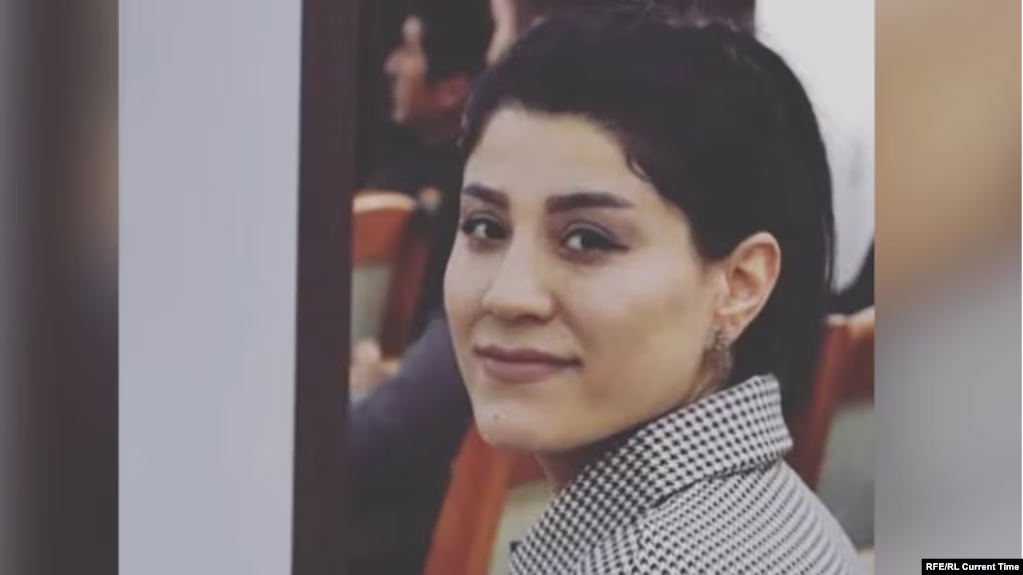
Rukhshona Khakimova. The investigative journalist was sentenced on February 5, 2025, to eight years in prison on a charge of treason. Media reports linked the case to a public-opinion survey she conducted on China’s influence in Tajikistan. The trial was held behind closed doors and the authorities classified the case. In 2026, her sentence was reduced by three years under an amnesty; she remains in prison. She is a journalist who conducted a survey, rather than someone whose profession has been established as sociologist.
Ulfatkhonim Mamadshoeva. The journalist and human-rights defender was sentenced in December 2022 to 20 years on multiple charges connected to protests in the Gorno-Badakhshan Autonomous Region. The July 2026 amnesty reduced her term by three years, to 17 years. CPJ says she is serving her sentence at a women’s prison in Nurek. The UN Working Group on Arbitrary Detention previously found her detention arbitrary.
Khushruz Jumayev, also known as Khushom Gulyam. The journalist and blogger received an eight-year sentence in 2022 in a case alleging membership in a group that the authorities linked to protests in Gorno-Badakhshan. According to CPJ, the 2026 amnesty reduced his term by one year. He remains imprisoned.
Ahmad Ibrohim. The editor-in-chief of the independent newspaper Payk was sentenced on January 10, 2025, to 10 years and four months on charges of bribery, extortion and extremism. He is serving his sentence; Ibrohim and his defense denied the charges. CPJ says the trial was held behind closed doors.
Abdullo Ghurbati and Daler Imomali. Ghurbati received a seven-and-a-half-year sentence in October 2022; Imomali was sentenced to 10 years. According to information published by Asia-Plus and human-rights organizations following the 2026 amnesty, both sentences were reduced by three years. They were still serving their sentences when this article was prepared; Imomali’s relatives expected him to be released in 2027.
Khurshed Fozilov. The journalist from Panjakent was sentenced in May 2023 to seven years on a charge of participating in a banned extremist organization. His family reported pressure and a forced confession; in July 2026, his sentence was also reduced by three years. He remains imprisoned.
Earlier lists also named Zavqibek Saidamini and Abdusattor Pirmuhammadzoda, but they should no longer be counted among those in prison: both were released under the amnesty in July 2026.
The country’s fourth review
The Universal Periodic Review is a Human Rights Council mechanism through which states assess one another’s implementation of human-rights commitments. This is Tajikistan’s fourth review; the previous cycles took place in 2011, 2016 and 2021. The process draws on a national report, UN materials and information from civil society.
According to the schedule announced by the chair of the session, the section of the report containing recommendations is due to be adopted on November 13. At the time of publication, the review had not yet been completed, so the final list of recommendations and Dushanbe’s position on each had not been approved.
Sources
- Asia-Plus: “Torture, domestic violence and freedom of expression: what Tajikistan told the UN about human rights and what recommendations it received”
- UN Human Rights Council: 53rd session of the UPR Working Group
- Norway’s Permanent Mission to the UN: recommendations to Tajikistan, November 5, 2026
- UN transcript of the review of Tajikistan, November 5
- Committee to Protect Journalists: submission to the UPR on Tajikistan
- Human Rights Watch: Rukhshona Khakimova’s case and the survey on China’s influence
- CPJ: Ulfatkhonim Mamadshoeva
- CPJ: Khushruz Jumayev (Khushom Gulyam)
- CPJ: Ahmad Ibrohim
- CPJ: Khurshed Fozilov
- CIVICUS Monitor: releases and sentence reductions under the 2026 amnesty