Kazakhstan Elects the Kurultai as the CEC Disputes Description of Elections as “Early”
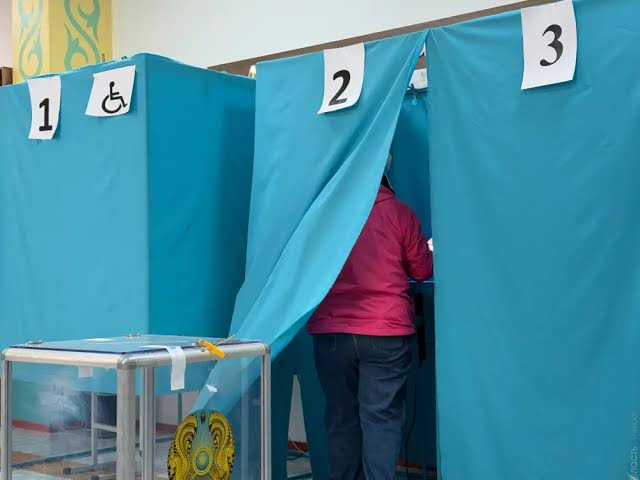
ASTANA, August 23, Free Eurasia. Voting began in Kazakhstan on Sunday in elections to the Kurultai, the country’s new unicameral parliament established as part of the 2026 constitutional reform. For the first time, all 145 members of the new legislature are being elected exclusively through party lists in a single nationwide electoral district for five-year terms. slot depo 5k/a>
A total of 545 candidates representing seven political parties are competing for seats in the Kurultai. The elections mark the first formation of parliament since the new Constitution came into force, replacing the former bicameral legislature with the unicameral Kurultai.
On the eve of the vote, the leadership of Kazakhstan’s Central Election Commission met with foreign journalists and observers in Astana, presenting information on preparations for the elections and answering questions on political competition, international observation, voting abroad, the future composition of parliament and the country’s new configuration of political institutions.
CEC: Electoral System Ready for Voting
Deputy Chairman of Kazakhstan’s Central Election Commission Mukhtar Yerman said the country’s electoral infrastructure was fully prepared for voting.
According to figures presented at the press conference, more than 10,000 polling stations have been organized in Kazakhstan and abroad, with more than 71,000 election commission members involved in administering the vote.
The CEC also provided details on voting arrangements for Kazakh citizens abroad. According to the information presented at the briefing, 79 polling stations have been prepared outside Kazakhstan, while the number of potential voters abroad exceeds 12,000 people.
The CEC said that, due to the situation there, it had not been possible to organize voting in Iran.
The commission also described an extensive voter-information campaign. Voters received notifications through government digital services and SMS messages; QR codes were used to help citizens locate their polling stations; and election commission members conducted door-to-door visits and distributed personalized invitations.
The commission has also launched its own AI assistant, operating in Kazakh, Russian and English. According to CEC representatives, the service allows users to obtain information about voting procedures, the new Constitution and updated electoral legislation.
Accessibility for Voters with Disabilities
A separate part of the presentation focused on ensuring the electoral rights of people with disabilities.
CEC representatives said special materials, including Braille templates, had been delivered to polling stations for blind and visually impaired voters. Since not all blind voters are able to read Braille, audio formats have also been made available to provide the information necessary for voting.
A special working group on the electoral rights of persons with disabilities operates under the CEC and includes representatives of government bodies, civil society organizations and associations representing people with disabilities.
According to the commission, preliminary monitoring identified accessibility problems at approximately 50 polling stations. The CEC said the shortcomings had subsequently been addressed.
International Observers
A significant part of the press conference focused on domestic and international election observation.
According to figures presented at the meeting, 717 international observers, representing foreign countries and 30 international organizations, had been accredited to monitor the elections.
Yerman stressed that Kazakhstan also sends observers to elections in other countries and views such exchanges as a reciprocal part of international cooperation.
Asked who finances foreign observers, Yerman said Kazakhstan does not fund the activities of international election observation missions.
“No funding. Everybody is paying,” he said, explaining that the costs are covered by the missions themselves or by the parties that send them.
The CEC also described training provided to election commission members, political party representatives and non-governmental organizations. According to the commission, the objective was to ensure that all participants in the electoral process — from election officials to parties, observers and journalists — understood their roles and the requirements of electoral law.
CEC Disputes Description of Elections as “Early”
One of the most notable exchanges during the meeting concerned the status of the elections.
Yerman specifically addressed the fact that international bodies, including the OSCE, have referred to the August 23 vote as “early elections.”
He disagreed with that characterization.
According to Yerman, the elections should not be viewed as early elections but rather as a vote being held under the new constitutional framework following the adoption of the new Constitution.
“Our elections are not early elections. These are elections being held on time after the adoption of the new Constitution,” he stressed.
Yerman said he had also sought to explain this position to representatives of the OSCE Parliamentary Assembly.
He noted that Kazakhstan is a full member of the OSCE and that he himself had participated on numerous occasions in international election observation missions in other countries.
The position of international observers, however, differs from the CEC’s interpretation: the OSCE Office for Democratic Institutions and Human Rights describes the August 23 vote as “early parliamentary elections.”
“The Only Judge Is the People of Kazakhstan”
Another pointed question concerned the reality of political competition.
One journalist referred to criticism suggesting that the main political decisions had effectively already been made and that participation in the elections therefore served little practical purpose.
Yerman rejected that assessment. He said different political parties were contesting the elections with their own programs and varying political potential, and that the final outcome should be determined by the vote.
“There is only one judge, and this judge is the people of Kazakhstan,” the CEC deputy chairman said.
According to him, only after the votes are counted will it become clear who emerges as the leader, which parties occupy intermediate positions and which remain outside the new parliament.
Asked what message Kazakhstan wanted to send to the world through these elections, Yerman described the Kurultai as a “new, updated version” of parliament and expressed hope that the new model would become a more effective and progressive mechanism of parliamentarism.
New Faces and Younger MPs
The press conference also addressed whether the reform would result in genuine renewal of the country’s parliamentary representation.
Yerman expressed hope that the new parliament would differ not only in its institutional structure but also in its membership.
He said he expected the Kurultai to include “new faces with new ideas, new vision and innovative approaches.”
The CEC deputy chairman noted that a trend toward the emergence of younger politicians had already been visible and described the renewal of the parliamentary corps as a positive development.
At the same time, he declined to predict the future party balance in the Kurultai, stressing that the outcome should be determined by the vote.
Why Almaty Votes Differently from Astana
One foreign journalist pointed to differences in voting behavior between residents of Astana and Almaty observed during previous elections.
Yerman described Almaty as a special case. As Kazakhstan’s largest city and former capital, he said, it has its own distinct social and political environment.
He pointed to the high level of activity among Almaty residents on social media and in civil society organizations and acknowledged that the city’s electoral behavior may differ from that of Astana and other regions.
The CEC deputy chairman, however, did not attribute those differences to any single political factor.
CEC: “We Do Not Control Political Parties”
During the discussion, Yerman was also asked about oversight of political parties.
He stressed that the commission does not interfere in parties’ internal activities.
According to Yerman, the CEC’s authority is limited to monitoring compliance with electoral legislation, including rules governing the use of funds allocated for election campaigns.
“We do not control the parties,” he stressed.
The commission’s role, he said, is to ensure compliance with the rules and the law, rather than to determine the political activities of election participants.
The People’s Council as a New Element of the Political System
Another question concerned the People’s Council, another institution introduced as part of Kazakhstan’s new political architecture.
Yerman explained that the People’s Council is expected to include representatives from different sectors of society, with its composition formed with the participation of the president.
The CEC deputy chairman identified the right of legislative initiative as one of the new body’s most significant powers.
According to him, the People’s Council will be able to initiate new laws and legislative amendments.
Yerman also described it as a new platform for representatives of civil society, non-governmental organizations and the regions, allowing them to discuss issues of public importance and put forward their own proposals.
He expressed hope that the new institution would become an “effective and productive” element in the further development of Kazakhstan’s political system.
A New Parliament Following Constitutional Reform
The August 23 elections mark the completion of one of the key stages in a broad restructuring of Kazakhstan’s state institutions.
The Kurultai replaces the former bicameral parliament. It will consist of 145 deputies elected for five-year terms exclusively through party lists in a single nationwide electoral district.
A total of 545 candidates from seven parties have been registered for the current campaign.
The vote will therefore not only determine the distribution of seats among political forces but will also provide the first practical test of how the parliamentary model created following the constitutional reform will function.
The authorities portray the transition to the Kurultai as a renewal of the political system and an opportunity for new faces and ideas to emerge. International observers, meanwhile, will assess not only the organization of voting itself, but also political competition, campaign conditions and the process’s compliance with Kazakhstan’s international commitments.
For that reason, the dispute between the CEC and OSCE representatives over whether the elections should be described as “early” goes beyond terminology. It reflects a broader question of how Kazakhstan’s authorities and international observers assess the nature and political significance of the institutional reset now under way.
Islam Tekushev, Astana