From Samarkand to Smolensk in 72 Hours: How Recruiters Lure Central Asians into Russia’s War Against Ukraine
Prague, November 11, Free Eurasia. Promising high earnings, Russian citizenship and transport from Central Asia to Moscow, Russian recruiters continue to use job advertisements to lure citizens of Tajikistan, Kazakhstan and Uzbekistan into military service in occupied parts of Ukraine.
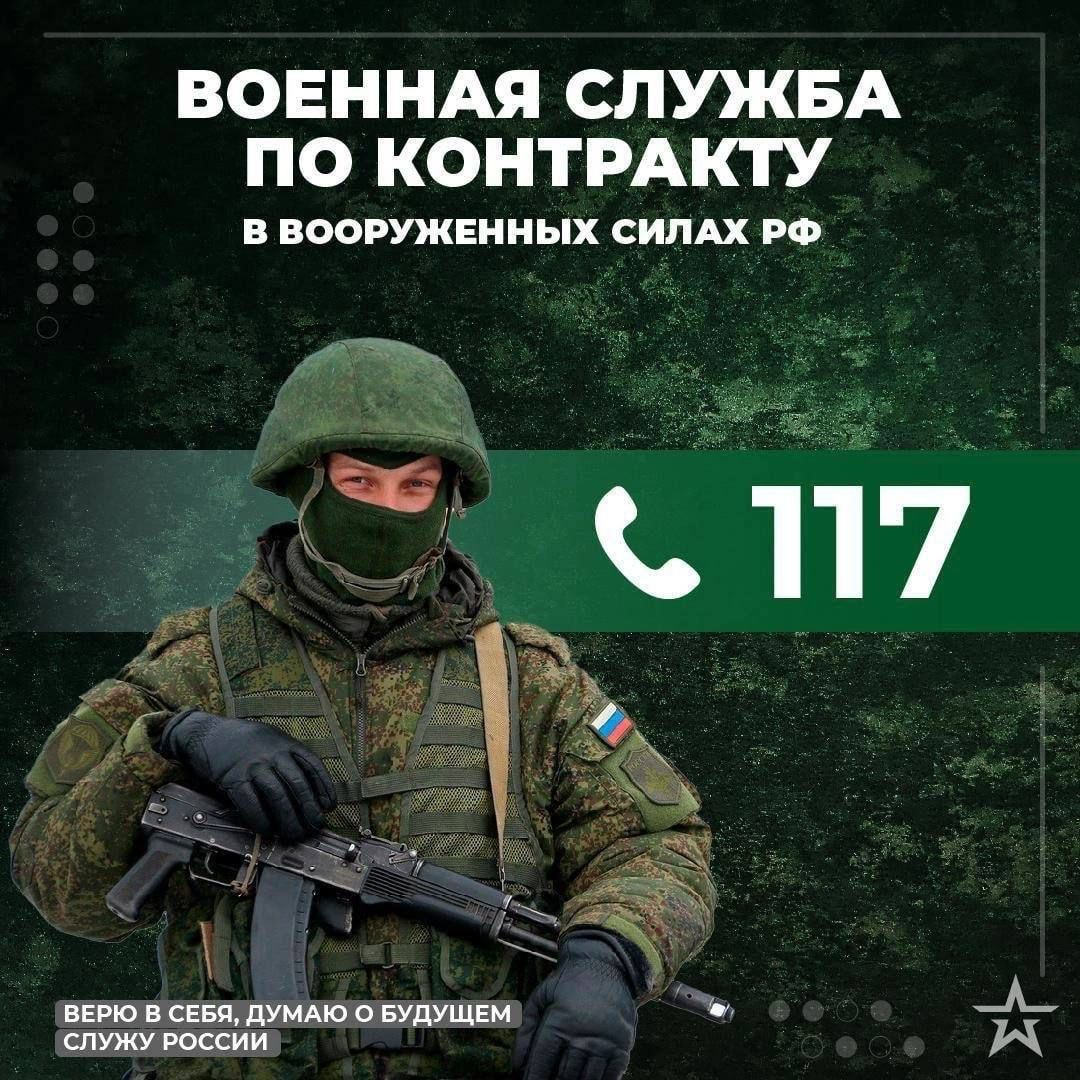
After reviewing public Telegram archives of job advertisements in Russia for citizens of CIS countries, the Free Eurasia editorial team found dozens of repeated offers to sign a military contract. Recruiters promise a payment of 2.5 million roubles, help obtaining Russian citizenship, travel costs, accommodation, food and training.
In the Telegram channel “VAKHTA | Rotational Jobs,” Free Eurasia reporters contacted two recruiters, Mikhail and Oleg, who presented themselves as recruitment intermediaries: https://t.me/s/Vahta_rabota4?before=14982.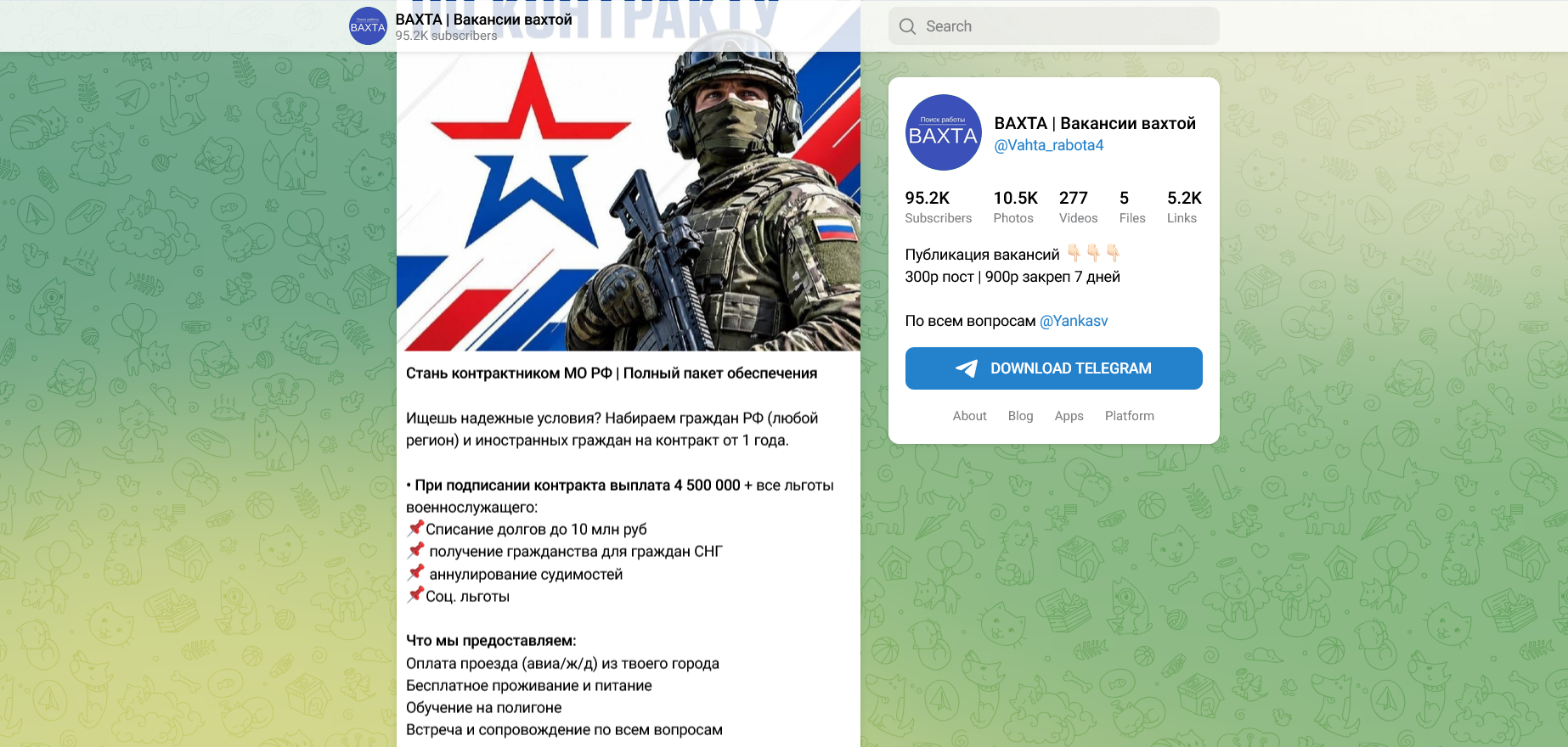
To get the recruiters to explain how the recruitment system works, a Free Eurasia journalist posed as a 49-year-old citizen of Uzbekistan living in Samarkand.
Oleg, whose chat profile was named “Sv,” spoke about travel to Moscow, payments and Russian documents. Mikhail, identified in the newsroom’s notes by the contact @arriva90 and displayed in the chat as John D, proposed a route from Moscow to Smolensk and described recruitment into engineering troops, where, he said, citizens of other countries were in demand.
Both said they had already helped people from Central Asia or could put the candidate in touch with people who had arrived earlier.
72 hours to reach the medical examination
Mikhail said he was speaking from Moscow. He asked about the candidate’s age, city and citizenship, then whether he could enter Russia and whether he had ever broken the law. The journalist replied that he was 49, from Samarkand, and held only Uzbek citizenship.
Mikhail said they had sent people from Tashkent several months earlier, although he was unsure whether their mobile service was working now and whether the journalist, who introduced himself as Islam from Samarkand, would be able to speak with his compatriots.
Audio transcript
Islam, one more time. Let me explain how the process will work.
We’ll buy you tickets to Moscow. Then you’ll need to take a train to Smolensk—we’ll buy those tickets too. When you arrive in Moscow, we’ll either order a taxi to the station or, if our representative is there or I’m free, we’ll meet you. So don’t worry about that.
Why Smolensk?
Because the conditions there are the most accommodating right now—first, for citizens of CIS countries, since you aren’t a Russian citizen, and second, in terms of assignment.
How does it all work?
You arrive in Smolensk and are assigned from there, depending on when you arrive. If, for example, you arrive early in the morning, you’ll go straight to the medical examination. If you arrive in the evening, you’ll stay overnight—they’ll put you up—and go for the medical examination the next day.
After that, they’ll interview you. They try to find a role where a person will be most useful. There’s no point, for example, sending a cook to the artillery, or an artilleryman to work as a driver.
Then you sign a contract. After signing, you get a one-time payment—two million roubles at the moment. It comes in two parts over two weeks. In addition, depending on your assignment, you’ll receive a monthly salary of 210,000 to 260,000 roubles. There isn’t much to spend money on there, so you can save a decent amount.
You’ll have a second-category contract. That means it lasts one year and does not renew automatically. You can extend it yourself, or you can say, “That’s it, guys, I’m tired, I want to go home.”
Also, as a participant in the “special military operation” [the Russian government’s term for its war against Ukraine], you can obtain Russian citizenship through a simplified procedure. Taking part in the “special military operation” does not necessarily mean you’ll be at the front. For example, a cook working somewhere in the rear is also considered a participant.
If these terms are acceptable to you in principle, please tell me how soon you could fly. I’ll need to get the first page of your passport, with your photo, and send it for review. If your application is approved, you’ll have 72 hours to arrive for the medical examination. Would you be able to get there within 72 hours of approval?
If all of this is possible, I’ll ask you a few questions for the application later, to understand where to recommend you—for example, about your health and so on.
Mikhail later sent another voice message
Look, you’ll definitely need to tell them all of this at the interview. The fact that you can work in construction is a very big plus. I’ll explain why.
There’s a large recruitment drive for the engineering troops now—during the Soviet era they were called the construction battalion—to rebuild the “liberated territories.” That means Mariupol, the Luhansk People’s Republic and so on. They need a lot of construction workers there.
If you also have experience driving trucks, that’s another big plus: they need drivers for humanitarian cargo now. Mostly trucks, something like Ural vehicles. The smallest is a “Bukhanka” van. If you’ve driven trucks, that’s excellent.
Based on the interview, they’ll assign you to a position that suits both you and them best.
Oleg promised tickets and a place “where it’s better”
“Four people arrived literally two days ago,” Oleg wrote. He added that SIM cards were being arranged for them. When asked for a contact, he said he could pass along Alijon’s number. According to Oleg, Alijon had already been on leave and had called him recently.
Oleg also said that Telegram was being blocked in Russia and suggested communicating through MAX or by regular phone. When the candidate asked where he would be sent, Oleg replied: “The ticket is to Moscow in any case. And then we’ll choose where it’s better.”
Oleg’s messages did not specify a region, unit or service conditions. Later, he said training lasted from one to three months and that payments would go to a Russian bank card, from which the money could be transferred to Uzbekistan.
19:28 Oleg: You’ll need to get some documents, but we’ll arrange them.
19:28 Islam: Which ones?
19:28 Oleg: You get 2 million to 2.5 million on average.
19:29 Oleg: Plus a monthly salary starting at 210,000.
19:29 Oleg: SNILS, INN, Gosuslugi, and a Russian bank card—we’ll arrange them.
19:29 Islam: Is there anyone from Uzbekistan?
19:30 Oleg: Yes, of course. A lot of guys come.
19:30 Islam: Can you give me a contact?
19:30 Oleg: Four people arrived literally two days ago.
In another part of the conversation, Oleg spoke about four men from Kazakhstan who, he claimed, were ethnic Uzbeks and wanted to go together. He said they had “sorted things out well” for them. When asked for a contact, Oleg offered to connect the journalist with Alijon and sent his number.
Overall, Free Eurasia found several dozen advertisements addressed to users in other countries. They feature private recruiters who, judging by the correspondence, act as intermediaries between potential candidates and the military recruitment system. The editorial team was unable to verify their contractual relationship with Russia’s Ministry of Defence.
The identities of Oleg and Mikhail, and their authority to sign contracts or act on behalf of military structures, have not been verified by the editorial team. Nor could the team verify that they had actually sent the people they mentioned, that Alijon is serving or was on leave, that recruits received payments and citizenship, or that they were assigned to the promised specialties.
To support his claims, recruiter Oleg sent a video message from an airplane in which a man identified as Ilhom waves at the camera. Oleg said Ilhom had recently arrived; the editorial team could not independently verify his identity or the circumstances of his trip.