Abkhazia: Stalinist Repression and the Roots of the Georgian-Abkhaz Conflict
November 2, Free Eurasia.
Reprinted. This article was first published by Free Eurasia in October 2020.
October 30 is observed in Abkhazia, as in Russia, as the Day of Remembrance for Victims of Political Repression. The mass repressions of the 1930s and 1940s were among the darkest episodes in Abkhazia’s history. According to the Association for the Remembrance of Victims of Political Repression, as many as 7,000 people were repressed in the republic during those decades.
Searching for enemies
As Stalin and his inner circle pursued accelerated modernization from the late 1920s onward—through industrialization, collectivization and the first Five-Year Plans—the Soviet leader and his associates called for both a “healthy body” and a “healthy spirit.” In a speech at the Eighth Congress of the Komsomol on May 16, 1928, Stalin spoke of the growing activity of “class enemies” and their “subversive work,” while condemning what he called “shameful facts of moral decay and disintegration” in some party organizations. An even more consequential speech came on December 27, 1929, at a conference of Marxist agrarians, where Stalin called for a “decisive battle against internal capitalism,” referring to the “liquidation of the kulaks as a class.”[1]
A friendship with the leader
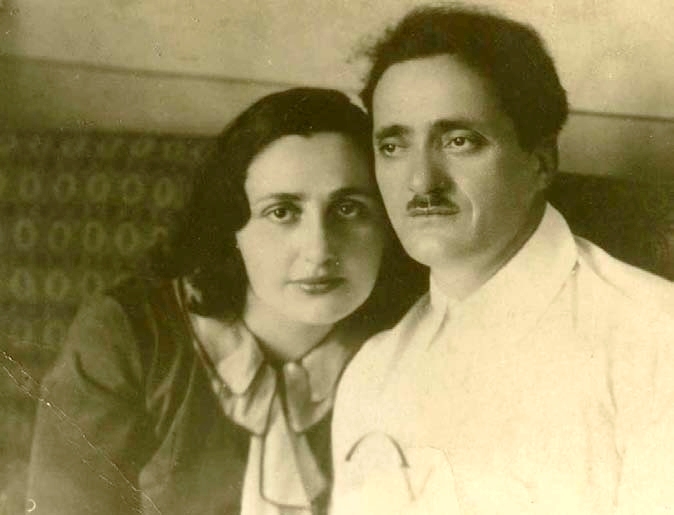
It was during this period that Nestor Lakoba, then chairman of the Council of People’s Commissars of Abkhazia, persuaded Stalin to build a government dacha in Abkhazia, at Chyornaya Rechka.
Lakoba wanted Stalin’s residence to be on the territory under his administration. This gave him the opportunity to speak directly with the Soviet leader about sensitive matters, including raising Abkhazia’s constitutional status without going through Tbilisi. Historian A. Artamonov writes that Lakoba saw Stalin’s visits as a chance to pursue the “complete de-Georgianization of Abkhazia,” without the presence of officials from the Georgian SSR.[2]
The Georgian factor
Lakoba’s ambitions reflected the political realities of the time. In 1931, Abkhazia’s status was changed: from a treaty-based Soviet republic, it became an autonomous republic within the Georgian SSR. The decision was deeply unpopular among Abkhazia’s political leadership and local intelligentsia. Abkhaz historian S. Lakoba wrote that as Stalin’s power grew, Abkhazia’s status was steadily downgraded: in February 1931, it was made an autonomous republic and incorporated into the Georgian SSR.[3]
That same year, representatives of the Abkhaz intelligentsia appealed to the Soviet leadership, asking for permission to leave Georgia and either join the Russian Soviet Federative Socialist Republic (RSFSR) or become a separate Union republic.[4] In 1935 and 1936, Lakoba repeatedly raised with Stalin the question of incorporating the Abkhaz ASSR into the RSFSR. S. Lakoba wrote that this greatly irritated Stalin.[5]
Repression and Georgianization
Lakoba’s plans and those of Abkhazia’s intellectuals were never realized. Lakoba died in December 1936 after a conflict with Lavrentiy Beria; his family and relatives were subjected to repression. His wife, Sariya, and their teenage son were tortured and abused in custody. After Lakoba’s death, members of Abkhazia’s political elite and intelligentsia were executed.
Abkhazia remained an autonomous republic within the Georgian SSR until the dissolution of the Soviet Union. Historian S. Lakoba argues that, until Nestor Lakoba’s death in 1936, Abkhazia made significant socioeconomic and cultural gains during a period of relative stability. From 1937 to 1953, he says, the republic experienced a “dark period of overt Kartvelian (Georgian) expansion and suppression of the Abkhaz as an ethnocultural community.”[6]
Russian Caucasus scholar S. Markedonov also wrote that Georgian authorities pursued a policy of discrimination against Abkhaz people under Stalin. According to Markedonov, the Abkhaz alphabet was replaced by the Georgian script in 1937–1938; Georgian became the main language of instruction in Abkhaz schools in 1945–1946; and many Abkhaz place names were changed to Georgian ones. He also described the state-sponsored migration of rural residents from Georgia’s inland regions to the Abkhaz SSR.[7]
Contemporary Abkhaz researchers link the Georgianization campaign of the late 1930s and 1940s to territorial ambitions on the part of the Georgian leadership. G. Kolbaya, for example, wrote that Georgian place names introduced around Adler and Sochi could serve as possible arguments for future territorial claims.[8][9]
At the same time, some researchers view Soviet nationality policy as a factor that helped the Abkhaz retain their status as an indigenous and titular people in Abkhazia. This assessment was offered by A. Tsutsiev, an expert on the ethnopolitical history of the Caucasus.[10]
Roots of the Georgian-Abkhaz conflict
In the long term, the experience of Abkhazia’s incorporation into Georgia contributed to mutual estrangement and growing tensions, in the author’s view. This became evident in the all-Union referendum on the future of the USSR on March 17, 1991: a majority of Abkhazia’s residents voted to preserve the Union, while Georgia, having chosen a path toward secession, ignored the referendum. The disagreements deepened during Mikhail Gorbachev’s perestroika and culminated in the tragedy of the Georgian-Abkhaz war, which began in August 1992 when armed formations of Georgia’s State Council entered Abkhazia.[11] About 8,000 people, including civilians, were killed during the hostilities. The war dealt a devastating blow to Abkhazia’s economy, and its effects have not been fully overcome.
[1] I. V. Stalin. A Short Biography, 2nd ed. Moscow: State Publishing House of Political Literature, 1948, p. 127.
[2] A. Artamonov. Government Dachas on the Black Sea Coast of the Caucasus. Moscow: Tsentrpoligraf, 2018, p. 264.
[3] S. Lakoba. Abkhazia after Two Empires, 20th–21st Centuries. Moscow: Materik, 2004, p. 89.
[4] S. Markedonov, “The Ethno-Political Conflict in Abkhazia: Origins, Dynamics and Implications for Regional Security,” in Abkhazia: Between the Past and the Future, ed. Islam Tekushev, Sergey Markedonov and Kirill Shevchenko. Prague: Medium Orient, 2013, p. 26.
[5] S. Lakoba. Abkhazia after Two Empires, 20th–21st Centuries. Moscow: Materik, 2004, p. 123.
[6] Ibid., p. 7.
[7] S. Markedonov, “The Ethno-Political Conflict in Abkhazia,” in Abkhazia: Between the Past and the Future, Prague: Medium Orient, 2013, p. 24.
[8] G. N. Kolbaya. The Sochi Olympics in Global Politics. Moscow: Infra-M, 2013, p. 5.
[9] Ibid., p. 5.
[10] A. Tsutsiev. Atlas of the Ethnopolitical History of the Caucasus (1774–2004). Moscow: Evropa, 2006, p. 67.
[11] K. Shevchenko, “The Struggle for the Nation-State: Abkhazia in the Context of Post-Soviet Nation-Building Processes,” in Abkhazia: Between the Past and the Future, Prague: Medium Orient, 2013, p. 12.