China and Its “Fortress Eurasia”
ASTANA, August 21, Free Eurasia. Amid growing economic and political competition between the United States and China, Central Asia is acquiring new strategic importance. On the one hand, Washington is seeking to prevent the region from becoming excessively dependent on China. On the other, Beijing is doing everything it can to create overland energy and trade routes across Eurasia that would be protected from a potential maritime blockade. slot depo 5k/a>
How this rivalry is reshaping the place and role of Central Asia in the global geopolitical competition between the great powers was the focus of a roundtable held in Astana under the title “Kazakhstan and the New Eurasian Landscape: Strategic Partnerships, Connectivity and Economic Opportunities.”
The discussion was organized by Kazakhstan’s CFive analytical center with the participation of the U.S.-based Hudson Institute.
As a Free Eurasia correspondent reports, one of the most notable presentations was delivered by Ken Moriyasu, a senior fellow at the Hudson Institute, who proposed viewing Kazakhstan not simply as a country located between Russia and China, but as one of the key swing states of the emerging global geopolitical order.
Drawing an analogy with U.S. presidential elections, where a handful of swing states can determine the outcome of the entire vote, Moriyasu identified a group of countries that do not belong unequivocally to either the American or Chinese camp.
He included Kazakhstan, Uzbekistan, Mongolia, Pakistan, Azerbaijan, Armenia, Turkey and Hungary.
In his view, what distinguishes these countries is not only their foreign-policy flexibility. A significant number of them are located along an almost continuous belt across the interior of Eurasia — in roughly the same geopolitical “Heartland” described in the early 20th century by British geographer Halford Mackinder.
“I have a theory that there are swing states in global geopolitics as well. They are neither ‘red’ nor ‘blue’ — meaning they do not clearly belong either to the American camp or the Chinese camp. They are somewhere in between — figuratively speaking, they are ‘purple.’ And which way these countries eventually lean could become a determining factor in global politics,” Moriyasu noted.
According to him, he has concluded that there are eight such countries in the world today.
“These countries took part in two of the most important events of last year and this year. In September last year, a large military parade was held in Beijing to mark the 80th anniversary of the end of World War II. Representatives of 61 countries were sent to Beijing. Several months later, in January, President Donald Trump held the first meeting of the so-called Board of Peace on the sidelines of the World Economic Forum in Davos — a new body that was initially expected to deal with Gaza. However, Trump said its mandate was much broader than Gaza alone and that it represented, in a sense, a new alternative to the United Nations,” he recalled.
As Moriyasu noted, “representatives of 20 countries were on stage with Donald Trump in Davos.”
“If you compare the 61 countries represented in Beijing with those 20 countries, you find that ten states participated in both events. And if we list them from east to west, they are Kazakhstan, Uzbekistan, Mongolia, Pakistan, Azerbaijan, Armenia, Turkey, Hungary, Bulgaria and Indonesia. However, the last two — Bulgaria and Indonesia — subsequently distanced themselves from the Board of Peace. In Bulgaria, this was linked in particular to a change of government. Indonesia, meanwhile, was dissatisfied with U.S. actions in the war with Iran and announced that it was suspending its participation in the Board of Peace,” the expert recalled.
Thus, Moriyasu stressed, “eight countries remain: Kazakhstan, Uzbekistan, Mongolia, Pakistan, Azerbaijan, Armenia, Turkey and Hungary. These are what I call the eight geopolitical swing states.”
The expert also drew attention to their geographic position. According to him, “what is interesting is that all of them are located in an almost continuous geographical space — roughly in the area Halford Mackinder once called the Eurasian Heartland: from areas close to the Volga in Russia to directions stretching toward the Yangtze basin in China. All of this lies here, on the Eurasian continent.”
That is precisely why, he emphasized, “this region — Central Asia and further toward Turkey — will become one of the determining factors in great-power competition, above all between the United States and China.”
Moriyasu assigned a particularly important role to Kazakhstan.
“Among these eight swing states, I consider Kazakhstan the most important such country in the world,” the expert said.
Moreover, he argued that “Kazakhstan could become one of the key factors influencing China’s decision on whether to conduct a military operation against Taiwan. China’s decision on whether or not to invade Taiwan depends, to some extent, on Kazakhstan.”
Explaining this argument, Moriyasu stressed that, in his view, China’s ultimate objective is unification with Taiwan.
“This is not simply a territorial claim. It is not just about taking Taiwan and declaring victory,” he noted.
According to him, “the Chinese Communist Party views unification with Taiwan as the final piece of a much larger historical mosaic. It would finally bring an end to China’s so-called ‘century of humiliation’ and at the same time become the final step marking the end of Pax Americana — the American-led world order — and the beginning of Pax Sinica, a world order with China as the central power.”
“That is how important Taiwan is,” Moriyasu stressed.
However, before China can secure Taiwan’s incorporation, it needs to establish a reliable continental corridor. This, the expert believes, is where Beijing currently feels vulnerable.
As Moriyasu noted, “today China is theoretically capable of conducting a military operation against Taiwan if its objective is to invade and occupy the island. But such an operation would almost immediately trigger a response — above all, an economic one.”
As an example, he pointed to the possibility of a blockade of the Strait of Malacca.
“The United States today could relatively easily block the Strait of Malacca. In my view, five destroyers and one submarine would be sufficient,” the expert said.
At the same time, he stressed that “China today still depends enormously on oil supplies and trade flows moving along maritime routes.”
Therefore, according to Moriyasu, “such a situation would be unsustainable for China. Even if it succeeded in invading Taiwan, it would be extremely difficult to maintain that situation for long.”
This is why the expert believes Beijing is likely to proceed in two stages.
The first, Moriyasu said, would be “the creation of alternative routes across the Eurasian continent: pipelines, railways and other overland transport corridors.”
The main advantage of such routes, he said, is that “they are effectively beyond the reach of the U.S. Navy.”
“The American fleet cannot block a pipeline running through Kazakhstan. It cannot stop a train moving through Kazakhstan along a new overland corridor,” Moriyasu emphasized.
The expert recalled that SAIS professor Hal Brands refers to this concept as “Fortress Eurasia.”
According to Moriyasu, “when this ‘fortress’ is completed — when infrastructure beyond the reach of the American fleet has been created — China will feel significantly more confident when considering possible action against Taiwan.”
But the issue, he stressed, is not limited to the U.S. Navy.
China also seeks to conduct trade, including energy trade, with Turkmenistan, Russia and Kazakhstan using the yuan — RMB — while gradually reducing its dependence on the U.S. dollar.
As Moriyasu noted, “if China can protect itself from the influence of the dollar-based financial system, it will simultaneously become less vulnerable to economic measures by the United States.”
In his words, “this is another element in building this very ‘Fortress Eurasia.’”
In the expert’s view, China is currently one of the world’s largest trading powers, but a significant share of the energy resources and goods it requires continues to move by sea.
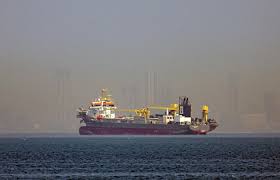
One of the most vulnerable points amid growing U.S.-China confrontation remains the Strait of Malacca, which links the Indian and Pacific oceans. In the event of a major military conflict between the United States and China, Beijing’s maritime communications could be cut off.
This is precisely why Beijing needs to build an alternative in advance. That alternative is continental Eurasia.
Gas pipelines, oil pipelines and railways passing through Central Asia cannot be stopped by aircraft carriers or closed by a naval blockade. In this context, Kazakhstan is transformed from a conventional transit country into an element of China’s global strategic infrastructure.
Moriyasu used the term “Fortress Eurasia” to describe a system of overland trade and energy connections that would allow China to retain access to resources and external markets even in the event of serious confrontation at sea.
But energy routes are only one part of this system.
According to the expert, Beijing is also interested in expanding settlements in yuan with Russia, Kazakhstan, Turkmenistan and other partners. The less China depends on the U.S. dollar and Western-controlled financial infrastructure, the more difficult it becomes to pressure it through sanctions.
Moriyasu recalled that 15 years ago American analysts imagined the evolution of Chinese strategy somewhat differently.
At the time, there was extensive discussion of the String of Pearls concept — Chinese investment in ports stretching from Myanmar and Sri Lanka to Pakistan and Bangladesh.
It was assumed that civilian port infrastructure could eventually acquire a dual-use function and enable a Chinese naval presence in the Indian Ocean.
China did — and still does — depend on Middle Eastern oil transported through the Strait of Hormuz and the Strait of Malacca. It was therefore widely expected that Beijing would rapidly expand its naval presence in the Indian Ocean to protect these communications.
However, Moriyasu believes events developed somewhat differently.
China’s main attention today is focused on the East China Sea, the South China Sea and the western Pacific. At the same time, Beijing is trying not so much to establish military control over all its maritime communications as to reduce its dependence on them.
Hence the growing interest in Eurasia.
In the expert’s view, U.S. strategy remains excessively focused on maritime confrontation. Washington is urging Japan, South Korea and Australia to increase defense spending and is working on the assumption that sufficient numbers of ships, submarines and aircraft are needed to deter China in the western Pacific.
But if part of China’s strategy consists of moving inward, into the continent, naval deterrence alone is not enough.
In the same context, Moriyasu suggested taking a closer look at the rapid development of Chinese electric vehicles.
China’s leadership in this sector is usually associated with technological competition and the transition to a green economy. However, the expert pointed to another dimension of the process — reducing dependence on oil.
As Moriyasu emphasized, “an electric vehicle does not need gasoline. Electricity, meanwhile, can be produced from domestic sources.”
China still generates a significant share of its electricity from coal. At the same time, the country is investing heavily in nuclear, solar, wind and hydropower.
The transition to electric transport therefore has not only environmental but also strategic importance: it allows China to replace part of its imported oil consumption with energy produced domestically.
In this system, Mongolia unexpectedly acquires greater importance.
China produces most of its coal domestically, but neighboring Mongolia possesses enormous reserves and is capable of increasing overland supplies. Just as with pipelines running through Central Asia, the U.S. Navy cannot blockade the Mongolian-Chinese border.
India as a Factor in Containing China
Against this background, Moriyasu offered a critical assessment of the long-standing U.S. and Japanese reliance on India as one of the key elements in containing China.
India, he stressed, remains an extremely important power in its own right. However, its geographic position — above all the Himalayas and the configuration of its relations with Pakistan — largely separates the country from the principal overland routes of Central Eurasia.
For this reason, the expert believes that the United States and Japan may have invested too much political capital in relations with New Delhi specifically as an instrument for containing Beijing.
This argument prompted objections from Kazakh participants in the discussion.
Bulat Sarsenbayev, who previously served as Kazakhstan’s first consul general in Hong Kong, recalled that natural barriers had historically not prevented trade between Central and South Asia.
According to him, caravan routes of the Great Silk Road passed through the region, as did trade routes connecting Central Asia with India. As one example, he cited Karkara in the Almaty Region, where a major international market historically existed.
Kazakh participants also drew attention to another aspect of the discussion: for Astana, China and Russia are not abstract elements of a global geopolitical confrontation, but its largest neighbors.
The former diplomat recalled the early years of the rapid growth in trade between Kazakhstan and China.
According to him, during his first diplomatic reception in Hong Kong, he proudly announced that bilateral trade had reached one billion dollars. Just one year later, the figure had risen to five billion.
He also recalled the answer given by Kazakhstan’s first president, Nursultan Nazarbayev, when a foreign journalist asked him about Kazakhstan’s relations with Russia and China.
“We have to live together,” the diplomat quoted him as saying.
For Kazakhstan, this is above all a matter of geography. The country has no access to the world’s oceans. Its access to global markets inevitably depends on relations with its neighbors and on the development of international transport corridors. At the same time, Kazakhstan lies between two of Eurasia’s largest powers — Russia and China. And this geography cannot be changed, the diplomat argued.
The participants in the roundtable also examined the energy dimension of the emerging Eurasian geopolitical landscape.
Kazakh energy expert and founder of Energy Analytics Abzal Narymbetov presented data covering eight major areas of energy production: oil, natural gas, coal, nuclear energy, solar energy, biofuels, hydropower and wind energy.
The data presented point to a high degree of concentration in global production.
The three largest producers account for around one-third of global oil production, almost half of natural gas production and more than 70 percent of coal output. A similar concentration can be observed in nuclear and renewable energy.
In almost all key segments, either the United States or China is among the leaders.
Narymbetov highlighted the fundamental connection between access to energy and the level of economic development. The more developed an economy becomes, the higher its per-capita energy consumption tends to be.
According to him, the energy transition does not mean that the need for energy itself disappears — what changes is primarily the structure of energy production.
In one of his central arguments, Narymbetov effectively supported Moriyasu’s logic.
In the expert’s view, China will not be able, in the foreseeable future, simply to replace the enormous volumes of oil and natural gas required by its economy.
Therefore, the question is not only about transitioning to electric vehicles or renewable energy, but also about where China will obtain the energy resources it still needs and along which routes they will be delivered.
This is where overland routes will become increasingly important. The greater the risks to maritime trade, the stronger China’s interest will become in energy corridors located within the Eurasian continent.
This directly concerns Kazakhstan.
The country is simultaneously a major producer of energy resources, a neighbor of China and an important link in routes connecting East Asia, Central Asia, the Caspian Sea and Europe.
The discussion in Astana therefore demonstrated a significant shift in the way Central Asia itself is being viewed.
For a long time, the region was perceived primarily through a Russian lens: as part of the former Soviet space located between Russia, China, Afghanistan and the Caspian Sea. Today, however, that situation is changing.
If China is indeed seeking to reduce its dependence on maritime communications, Central Asia is becoming part of Beijing’s global system of energy and trade security.
For the United States, this means competition with China cannot be confined to the Taiwan Strait, the South China Sea and alliances in the Pacific. It is inevitably extending into Eurasia.
This does not necessarily mean the emergence of new military bases or formal alliances. Pipelines, railways, energy contracts, settlements in national currencies, investment flows and the ability of individual states to guarantee — or not guarantee — the uninterrupted functioning of these links may prove far more important.
This is why Kazakhstan now finds itself in an unusual position. Its geographic vulnerability — its lack of access to the sea and its proximity to Russia and China — is gradually turning into a strategic advantage.
For Beijing, Kazakhstan is important as a supplier of resources and as part of a protected overland Eurasian network. For Washington, it is important as an independent state whose autonomy prevents that system from becoming completely dominated by China.
For Europe, Kazakhstan is part of alternative routes linking Asia with the European market.
And for Kazakhstan itself, the central question is whether it can turn the interest of the great powers into investment, new transport corridors and economic opportunities — while preserving its own strategic independence.
Islam Tekushev, Free Eurasia