The Snow Leopard Knows No Borders
PRAGUE, October 25, Free Eurasia. Another research center dedicated to the study and protection of the snow leopard has opened in Central Asia. This time it is in Kyrgyzstan: the Ak Ilbirs center began operating in the village of Ananyevo in the Issyk-Kul region. It will study the rare predator, provide veterinary care to animals and support their rehabilitation.
The center’s significance goes beyond studying and protecting the snow leopard. It has become part of regional cooperation, bringing governments and local communities together to preserve not only a rare predator but also a mountain ecosystem that extends far beyond national borders.
From camera traps to international programs
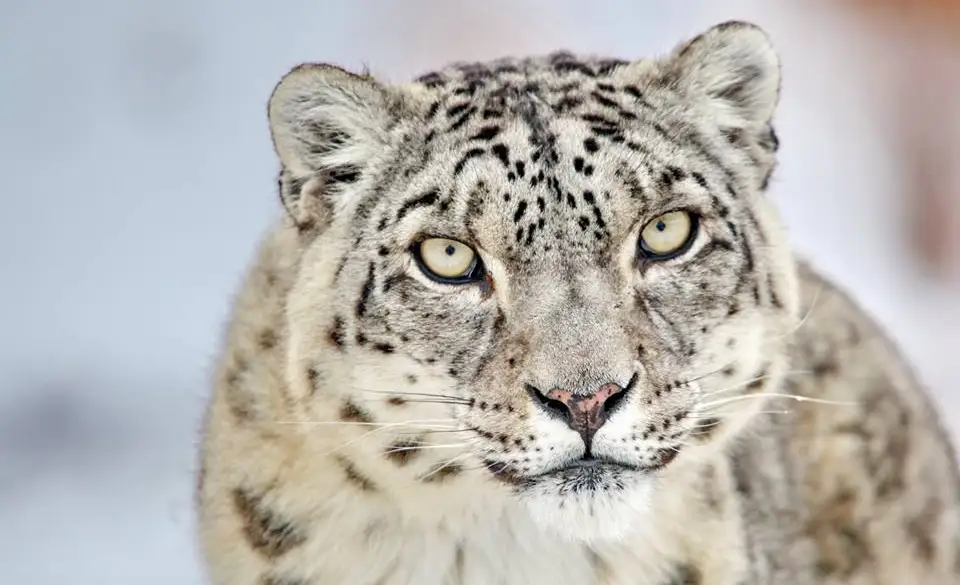
The snow leopard, or irbis, lives in the mountain regions of 12 Asian countries. In Central Asia, its range covers Kyrgyzstan, Kazakhstan, Tajikistan and Uzbekistan. The Tian Shan and Pamir-Alay ranges do not end at national borders, and the animals move between countries.
National estimates suggest that around 1,000 snow leopards or more may live in the four countries of the region. The exact number is unknown: countries use different counting methods, and their estimates are not always comparable.
According to Kyrgyzstan’s Ministry of Natural Resources, international efforts to protect the species are built around several programs. The International Union for Conservation of Nature lists the snow leopard as Vulnerable. In 2013, representatives of the 12 snow leopard range countries adopted the Bishkek Declaration and endorsed the Global Snow Leopard and Ecosystem Protection Program, or GSLEP. It brings together governments, researchers and international organizations.
Another cooperation mechanism is the CMS Central Asian Mammals Initiative (CAMI). It helps countries address challenges that cross borders: tracking animal movements, combating poaching and reducing conflicts between predators and people.
Shepherds and snow leopards
One of the serious threats to the snow leopard is persecution by people. Kyrgyzstan’s Ministry of Natural Resources says stronger protection and higher fines have helped reduce poaching. But retaliatory killings after attacks on livestock remain a problem. In Tajikistan, such attacks occur more often in autumn and winter, when predators come closer to settlements in search of food.
For families in mountain areas, losing sheep, goats or other livestock means a direct financial loss. In Tajikistan, 53 snow leopard attacks on livestock were recorded from 2016, resulting in the deaths of 905 animals. Sheep and goats accounted for about 95 percent of the losses. According to the NABU project, 84 percent of the attacks occurred in poorly protected enclosures.
Surveys of shepherds in some high-altitude areas of Kyrgyzstan’s Issyk-Kul region identified 33 livestock losses attributed to snow leopards between 2022 and 2024. The researchers caution that not all cases could be reliably distinguished from attacks by other predators. They also cite accounts of retaliatory killings of snow leopards, although direct confirmation is limited. See the study on the status of the snow leopard in Kyrgyzstan.
Researchers note that Central Asia’s mountain ecosystems are connected by ranges, pastures and animal migration routes. Their conservation therefore requires cooperation among governments and participation by local residents. Yet the region has no single, clear system for compensating livestock owners for losses. Tajikistan has provided compensation through individual projects, while published materials from a 2025 conference indicate that Kyrgyzstan had no active compensation scheme.
Each country has a role to play
It is difficult to identify a single leader in snow leopard conservation. Countries use different counting methods, and animal populations, monitoring quality and the area of protected land are different measures. Each country’s experience, however, matters to the region as a whole.
Kyrgyzstan is developing regional cooperation: GSLEP was launched in Bishkek, and the Ak Ilbirs center will focus on research and rehabilitation. Kazakhstan, meanwhile, is concentrating on monitoring and protecting habitats. Camera traps and satellite collars help track animal movements and plan protection for routes that cross borders.
Tajikistan has a snow leopard conservation program for 2024–2028, but the exact size of its population remains difficult to establish. Uzbekistan still needs to build joint monitoring: local populations are connected to areas in neighboring countries, but a shared observation system is not yet in place. The estimates cited here cannot be directly compared because they were produced in different years and using different methods. The issue is therefore not one country’s leadership, but different strands of work that can complement one another.
Conservation diplomacy
Protecting the snow leopard will not resolve disagreements over water, trade or security. It does give Central Asian countries a practical opportunity to cooperate: to share data, coordinate monitoring and protect areas along the snow leopard’s migration routes.
That is the irbis’s political significance. In a region where countries compete for influence and investment, the ability to work together on conservation is a measure of trust and readiness for regional cooperation between governments and communities.
The snow leopard does not unite Central Asia by itself. But its protection gives countries a shared task — and a chance to see how well they can carry it out together with local residents.
Islam Tekushev, Free Eurasia